So, you’re building a new website. First off: breathe. It’s easy to get overwhelmed by “tech-speak” about back-ends and hosting, but here is a secret:
“The most important part of your website has nothing to do with code. It’s all about the content”.
Think of your website like a new office or shop. You wouldn’t just throw furniture in a room and hope for the best. You’d plan the layout, the signs, and exactly what you want to say when a customer walks through the door.
Here is how to plan your content without losing your mind.
Know Your “One Big Thing”
Before you write a single word, ask yourself: What is the main goal of this site?
- Is it to get people to call you?
- Is it to sell a specific product?
- Is it to build credibility so people trust your brand?
If you try to make your website do everything at once, it will end up doing nothing well. Pick your “One Big Thing” and let that guide every page you create.
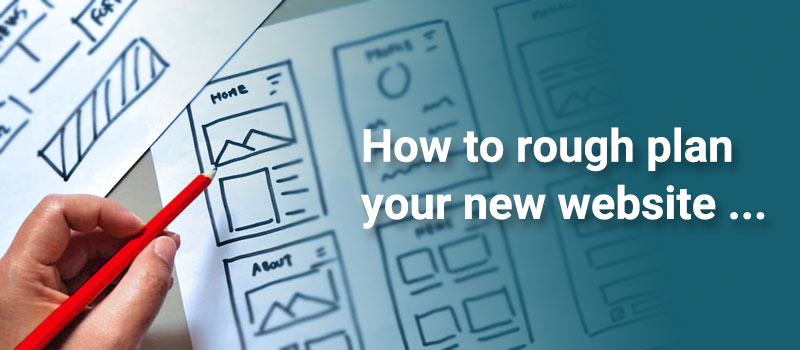
Map It Out (the paper sketch phase)
You don’t need fancy software for this. Grab pieces of printer paper and draw some boxes. This is your Sitemap. Most small business sites follow a classic, proven structure:
- Home:
The “opening intro” … who are you, and why should I care? - Services/Products:
What exactly do you offer? (break these into individual pages if they are distinct). - About:
Your chance to say who you are and why the visitor should use you. People buy from people they like. - Contact:
Make it ridiculously easy for them to contact and find you …. email, phone, form, social media, YouTube etc and a map if needed.
Write for Humans, Not Robots
A common mistake is trying to sound “professional” by using big, corporate words. In reality, that just makes people stop reading.
The Golden Rule:
- Write like you’re explaining your business to a friend over coffee.
- Use “I” more than “We”:
- Instead of “We provide excellence in logistics,” say it simply “We get your packages delivered on time, every time.”
- Focus on benefits, not features: Don’t just tell them what you do; tell them how it makes their life better/ easier.
Gather Your Visuals Early
A wall of text is a snooze-fest. You need “eye candy” to keep people engaged. Start a folder now and drop in:
- High-quality, large photos:
Real photos of you, your team, or your work are 100x better than generic stock photos. At first you may have to use stock images but aim to replace them as soon as possible. - Your Logo:
Ensure you have or can get, a high-resolution version. - Testimonials:
Reach out to three happy clients now and ask for a two-sentence review.
The “What Now?” (Call to Action)
Every single page on your site should end with a “What Now?”—known in the industry as a Call to Action (CTA).
Don’t leave your visitors hanging! Tell them exactly what to do next:
e.g. “Ready to start? [Book a Call]” “Check out our portfolio [View Work]”
Pro-Tip: The “Skim Test”
Most people don’t read websites; they skim them. Once you’ve written your content, look at it and see if you can understand the main point just by reading the Headings and the Buttons. If you can’t, it’s time to simplify.
Time spent on this paper “sketch” will save a good deal of time (and money) in creating your website. If you’re still stuck for ideas, look at your (successful) competitors ?